




The DNA & Census Truth: Separating 1790 Census Facts From the "Black Indian" Trend


Decoding the 1790 Census, the Violence of Slavery, and the Sanctity of Indigeneity
For any author, the act of writing is an extension of the soul. In my works, including How the Indian Beat the Black Out of Me and My Private Canon, I have endeavored to unpack the deeply complex layers of identity, history, and the spiritual realities that shape our bloodlines.
To understand Indigeneity is to understand a relationship with this land that predates federal documentation, colonialism, and modern racial categorization. Indigenous people were here first. Our roots are woven into the very soil of this continent, and that foundational truth must be protected with absolute reverence.
In my own family, our history is preserved not just through memory, stories, and ledgers, but through historical photographs that I hold as deeply sacred. These images are more than nostalgic keepsakes; they are irrefutable evidence of survival. They capture faces that navigated the crushing weight of systemic erasure, legal misclassifications, and the shifting definitions of race from the colonial era through the 20th century. When you look into the eyes of ancestors who were recorded as Free People of Color or Mulattoes, yet carried the undeniable lineage of the Waccamaw-Siouan, Lumbee, Keetoowah, Muscogee, or Chahta (Choctaw) nations, you are looking at a sacred testament to a heritage that refused to be extinguished.
Because these histories are so hard-won, it is essential to speak with professional candor and historical precision about a growing and unsettling trend: the sector of Black Americans claiming Indigenous ancestry based on contemporary trends, oral myths without verification, or an ahistorical desire to construct a novel "Black Indian" or "Black Indigenous" identity. To dismantle this erasure, we must return to the ledger of truth and dissect the actual demographics of our early nation.
The Mathematics of Survival: 1790 by the Numbers
Let us look directly at the 1790 United States Census, the very first federal count of this nation, and separate these groups as history demands.
The census outlines two entirely distinct populations with completely separate origins, legal realities, and lineages:
The Enslaved population: Approximately 700,000 human beings were held in brutal, hereditary chattel slavery. This population was comprised of individuals stolen, imported, and descended directly from West and West-Central Africa. They were stripped of their names, their tongues, and their freedom under a system of racialized bondage.
The Free People of Color population: Completely separate from the slave statistics, there were just under 60,000 individuals classified as free. Many were Indigenous, but not all.
To conflate these two groups, or to act as though the 700,000 enslaved West Africans can be retroactively rewritten into an indigenous identity, is a mathematical and historical impossibility. While a portion of the 60,000 Free People of Color did indeed draw their freedom and identity from their Indigenous mothers—because under colonial law, the status of the child followed the womb, allowing many Indian families to maintain their legal freedom—the vast population of enslaved people were of distinct African descent.
The math does not lie. You cannot take a population that was born of the transatlantic slave trade and seamlessly absorb them into an indigenous classification simply to satisfy a modern identity crisis. To do so erases the distinct, separate, and agonizing histories of both the African diaspora and the sovereign Indigenous nations who were surviving genocide on their own land.
Sovereignty Outside the Bounds: The Formation of Free Communities
To understand why so many modern descendants of Free People of Color possess genuine Indigenous bloodlines, we must understand how these free communities actually formed. They did not appear by magic; they were deliberate networks of survival forged by those who consciously chose a path outside the traditional reservation system.
During the 18th and 19th centuries, colonial powers and the infant U.S. government used reservations as a tool of containment and dependency. For many Indigenous people, accepting reservation status meant surrendering autonomy, submitting to federal surveillance, and watching their sovereign mobility vanish. To avoid this subjugation, countless Indigenous individuals and families chose non-reservation life. They dissolved into the difficult terrain of the American frontier—the dense swamps, the remote hills, and the isolated borderlands of states like North Carolina, Virginia, and Ohio.
This rejection of federal containment is a defining marker of our history. Great leaders fiercely resisted the reservation framework because they knew open air and sovereignty could not be penned in. As the legendary Chief Joseph of the Nez Perce accurately observed, "If you pen an Indian up on a small spot of earth and compel him to stay there, he will not be contented, nor will he grow and prosper." Our ancestors knew this intimately.
They chose the wilderness over the pen. Today, the reality of Indian life reflects this enduring legacy: the vast majority of Indigenous people—roughly 70% to 80%—live off reservations, residing in urban centers and historic rural communities.
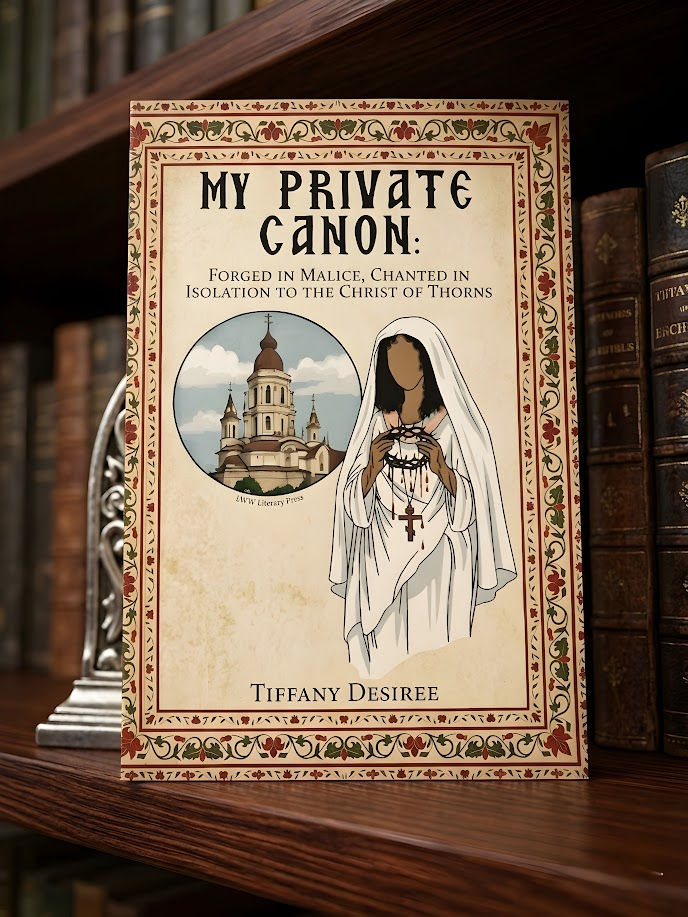
Being on a reservation does not make you Indian. As detailed in My Private Canon: Forged in Malice, Chanted in Isolation to the Christ of Thorns, true Indigeneity is not defined by a tract of government-allocated land. It is the womb you come from, the language you speak, your tribe, and your clan. It is a living, inherited reality carried in the blood, not a geographical designation stamped by federal agents.
In these spaces, away from the watchful eye of the state, these non-reservation refugees built autonomous settlements. Because they were legally categorized by a binary census as "Free People of Color" or "Mulattoes," these communities became sanctuary zones. They attracted survivors from multiple displaced Eastern Woodland tribes—such as the Waccamaw, Cheraw, Saponi, Tuscarora, and Catawba—along with a fairly small percentage of free people of African descent and sympathetic whites.
This geography of isolation explains why the descendants of these communities are often heavily mixed intertribally. Kinship was the currency of survival. As distinct tribal nations faced population fragmentation due to war and disease, they intermarried with one another to keep the bloodlines going. They preserved their Indigenous practices, farming techniques, and spiritual worldviews not under the banner of a federally recognized reservation, but under the heavy legal camouflage of a Free Person of Color label. This is a highly specific, geographically verifiable historical phenomenon. It cannot be claimed by those whose ancestors spent generations locked within the plantation complex of deep-South chattel slavery.
The Survival Strategy: Navigating the Jim Crow Binary

To verify how identity has been used as a tool of mobility, we must look squarely at the brutal reality of the Jim Crow South. White supremacist lawmakers engineered a draconian legal framework that ruthlessly divided society into two unyielding boxes: White and Colored. Because anti-Black terror, codified disenfranchisement, and daily public humiliation were at an all-time high, individuals of African descent actively searched for a legal gray area to bypass the worst elements of segregation.
Historically, non-reservation Indians occupied a deeply complicated, liminal space in the South. While white supremacists pushed a paper genocide to force non-reservation Indian families onto the "Colored" side of the ledger, a distinct, localized phenomenon emerged: a small percentage of Black individuals began claiming an Indigenous identity as a tactical survival mechanism to bypass the harsh realities of segregation. To be clear, because of centuries of historical coexistence, intermarriage, and shared communities in the South, there were real people who legitimately possessed both Indigenous and African ancestry. However, a degree of Black individuals without these roots also sought to claim a Native identity purely as a strategic shield. By asserting this status, they attempted to escape abysmal segregated schools, secure a seat away from the back of the bus, avoid the racial restrictions of sundown towns, and navigate society with a freedom of movement that was strictly denied to anyone labeled solely Black.
In pockets of the South, this loophole actually carried tangible legal weight. Some states were forced to begrudgingly recognize a three-tiered system—White, Indian, and Colored—prompting families to lean into or emphasize Indian ancestry to gain exemption from the most violent parameters of anti-Black hostility. Recognizing this history does not erase the trauma of Jim Crow, but it clarifies a critical distinction. While a small percentage historically used this survival loophole to navigate a brutal system, this history is separate from a modern growing trend of individuals who mistake this historical tactic for a verified, ancestral lineage to a sovereign tribal nation.
Deconstructing the Myth: From "Cherokee-Blackfoot" to the Florida Swamps
If we are to pull down this web of false history, we must expose the specific tribal names that are repeatedly co-opted. Step into any room where undocumented identity lore is spoken, and you will hear a relentless, uniform refrain: "I am part Cherokee and part Blackfoot." This precise tribal pairing has become an epidemic of historical folklore, yet it is a geographic and chronological absurdity.
Let us be completely clear about the historical record regarding the Blackfoot Confederacy (the Niitsitapi, meaning "the real people"). The Siksika, Kainai, and Piikani nations are a real, sovereign, and deeply documented alliance of Indigenous nations with thousands of enrolled tribal members. However, their ancestral territories straddle the northwestern boundary of the United States and Canada, specifically Alberta and Montana. They were northern plains bison hunters and did not inhabit the American Southeast, nor did they have any historical contact with Southern plantations or the transatlantic slave trade. Geographically and historically, it is a total impossibility for enslaved populations working the plantations of the American Deep South or mid-Atlantic to have mixed with a northern sovereign border nation located thousands of miles away on the Canadian frontier.
So why is the name so widely claimed in family lore across North America? The answer is rooted in historical misdirection and the allure of popular media. Historians and genealogists confirm that the Cherokee-Blackfoot dual claim is a ubiquitous, unverified family myth, particularly among families with no actual documented tribal enrollment.
In the 19th-century American South and Midwest, terms like "black foot" or "Blackfoot" rarely referenced the actual northern Plains confederacy. Instead, they functioned as local, colloquial descriptors or coded slang phrases within communities—frequently used to describe mixed-race ancestry or regional Eastern Woodland individuals who walked barefoot or wore dark-dyed moccasins. Over generations of telephone-game family folklore, these literal, localized descriptions were completely mangled. Combined with the 19th- and 20th-century romanticization of Plains warriors in American media, families began substituting obscure or unrecorded regional heritages with famous, dramatic tribal names like Cherokee or Blackfoot, cementing a fictional connection to a northern Canadian-border nation.
And then there is the Cherokee Nation—the most heavily co-opted tribe in human history. The Cherokee did not become the dominant, visible nation of the South by accident. They became a powerhouse by consciously engineering a policy of aggressive assimilation to combat white encroachment. To survive, the Cherokee elite actively internalized Anglo-American colonial systems. They established a centralized constitutional government, created a written alphabet, established Western-style plantations, and most critically, they adopted the system of racialized chattel slavery.
The Cherokee Nation grew into a dominant regional force that aggressively swallowed, pushed out, or legally erased smaller, non-assimilating Eastern Woodland tribes who refused to bow to colonial modernization. Following the Civil War, the Treaty of 1866 forced the Cherokee to adopt their emancipated Black slaves—the Cherokee Freedmen—into the tribe as citizens. This historical truth is vital: when a Black family has documented, verifiable ties to the Cherokee, it is overwhelmingly because their ancestors were enslaved by the Cherokee and marched on the Trail of Tears as property, not because they possessed an ancient, mythical Indian bloodline.
The modern irony is staggering. People are claiming Cherokee identity to feel closer to a romanticized, peaceful "oneness with nature," completely ignorant of the fact that the historical Cherokee were a powerful political machine that owned Black bodies, fought for the Confederacy, and actively enforced systemic assimilation that marginalized other Indigenous peoples.
This historical revisionism does not stop with the Cherokee; it expands directly into the coastal marshlands and swamps of the American Southeast, fueling a dangerous modern internet subculture built on fringe, pseudo-historical theories. Today, we see a heavy co-optation of the Yamasee and Seminole nations. Online echo chambers aggressively weaponize these specific tribal names to claim that Black Americans are actually the original, prehistoric aboriginal inhabitants of this continent. This narrative is a gross mutation of a real and tragic history.
While the historical record documents genuine, powerful military alliances between Indian groups and escaped African slaves—giving rise to the multi-ethnic Seminoles and the legendary Black Seminoles—these connections are being willfully misconstrued. The Black Seminoles did not exist as a separate, prehistoric "Black tribe" indigenous to Florida. They were human beings of direct African descent whose forebears bravely fled the horrors of Lowcountry plantation slavery to seek political asylum and refuge among the sovereign Indigenous populations of the Florida Everglades.
By flattening these complex, inter-ethnic military alliances into a fantasy of original aboriginal occupancy, these modern movements commit a profound double offense. They erase the authentic African diaspora's resistance to chattel slavery, while simultaneously stripping the sovereign Yamasee and Seminole peoples of their distinct, foundational history. It is a desperate attempt to fabricate an identity out of thin air, using the genuine shelter provided by sovereign Indian nations as a license to appropriate the land they bled to defend.

The Realities of Lineage: False Ledgers, Paper Ancestry, and the Limits of Science
To truly protect the boundary of truth, we must strip away the modern tools being used to validate these revisionist fantasies. Modern identity movements often weaponize historical corruption and corporate science to support unverified claims, creating a web of historical illusions that crumble under rigorous scrutiny.
The first illusion rests on the infamous history of the Dawes Rolls and the reality of the Five-Dollar Indians. Established in 1893 to break up communal tribal lands into individual allotments, the Dawes Commission became a hotbed for opportunistic fraud. Corrupt federal agents and opportunistic white settlers realized they could buy their way onto tribal registries. By paying an under-the-table bribe of exactly five dollars, thousands of white individuals with zero Indian ancestry were fraudulently enrolled as citizens by blood, stealing millions of acres of sovereign land.
While thousands of white opportunists bought their way onto these legal ledgers, a completely different reality occurred within authentic communities: countless true, non-reservation Indigenous people fiercely boycotted the Dawes Rolls entirely. They deeply distrusted the federal government, feared that signing a registry would lead to further state-sponsored persecution, or refused to split their families by choosing only one tribal label as the strict rules demanded. Consequently, an inheritance of unearned tribal benefits was passed down to white heirs, while a staggering number of legitimate Indian families remained completely undocumented. A government ledger is a record of colonial bureaucracy, not an infallible catalog of Indigenous blood.
The second modern illusion is the reliance on commercial DNA tests (like AncestryDNA or 23andMe). Testing companies heavily market the idea that a statistical percentage can prove an individual's Indian identity, but this is a scientific falsehood. Commercial DNA databases completely lack comprehensive tribal databases. Because of a deep, historically justified mistrust of medical exploitation and genetic extermination, sovereign tribal nations have overwhelmingly chosen not to participate in corporate genetic databases.
As a result, these commercial tests cannot distinguish among Cherokee, Navajo, or Mayan markers—nor do they have the data to verify membership in a specific North American community. They track broad, ancient biological markers that are thousands of years old. It is a scientific and mathematical impossibility to use a direct-to-consumer spit test to claim a factual connection to a living, sovereign nation. It reduces a deep, political identity down to a corporate biological novelty.
This reliance on external validation highlights a truly sad, but telling, psychological reality within the Black American community. Because the violence of chattel slavery stripped millions of their true African lineages, many families look at early federal census records and find that their ancestors’ names appear out of nowhere in America, without a single line tracing them back across the Atlantic.
Because their documented paper trail begins and ends on American soil, they mistakenly leap to the conclusion that their ancestors must have originated here as the prehistoric aboriginal people of this continent. It is a heartbreaking trauma of forced amnesia. They use the silence left behind by the transatlantic slave trade to claim that they are the original inhabitants of this land, completely erasing their true West African heritage while actively participating in the displacement of the Indigenous nations who were already here.
We must remember that historically, traditional Indigenous identity has never been about commercial test or colonial legal governance. Long before European contact, sovereign tribal identity was a matter of kinship networks, linguistic structures, ancestral lines of the womb, and clearly defined clans. It is a lived, reciprocal relationship with a living community and a specific territory. Indigenous identity is not a mathematical percentage on a website, nor is it a legal status granted or denied by a corrupt colonial government. It is a sovereign truth forged in blood and maintained through generations of survival.
The Double Erasure: Fighting the Pen and the Trend
Our grandmothers and grandfathers had to fight every single day just to keep our history alive through the brutal reality of state-sponsored erasure. They lived through times when the stroke of a bureaucrat's pen could legally rewrite their entire existence. They endured Jim Crow, racial integrity acts, and vital statistics registrars who systematically reclassified them, erasing their tribal identities on birth, marriage, and death certificates to force them into a neat racial binary.
Yet, despite the terror of losing their land, their legal status, and their safety, our ancestors held onto the truth. They guarded our family trees, they whispered the names of our tribes, and they hid our true history in plain sight within their family Bibles and sacred photographs. They suffered so that we could look at their pictures today and know exactly who we are.
This is why this new internet trend is so deeply offensive. This modern effort to construct a false "Black Indian" history out of thin air is not just a fantasy—it is a second wave of erasure. It attempts to rewrite a history that simply does not exist, and in doing so, it serves as a direct insult to the grandmothers and grandfathers who bled to protect the real one.
When people treat Indigeneity like a social media trend or a costume to escape their own history, they spit on the graves of our ancestors who were stripped of their true identities by force. They trivialize the genuine, localized trauma of the Indian people who had to navigate being legally invisible. Our grandparents did not survive systemic paper genocide just for their hard-won legacy to be hollowed out and appropriated by a modern identity movement.
The Architecture of Amnesia: How Slavery Caused Mass Confusion

We must have the courage to look at why this confusion exists among those who lack this specific lineage. Chattel slavery in America was a machine designed to produce amnesia. It was an institutionalized severing of identity. When millions of human beings are violently uprooted, stripped of their tribal lineages (such as the Mandinka, Yoruba, or Igbo), and forbidden from keeping their family records, a profound, intergenerational trauma takes root. Slavery created a vast, echoing silence where family trees should have been.
In the wake of this vacuum, a distinct phenomenon occurred. Generations removed from the slave ships, families who had lost their true African origins over centuries of bondage began to misinterpret specific physical changes that arose down the line. Traits like modified hair textures or specific facial definitions were frequently and mistakenly attributed to an "Indian ancestor" or a "Cherokee great-grandmother."
In reality, these shifting physical traits were often the direct result of complex multiracial mixing—including European ancestry introduced through the systemic sexual violence of the plantation economy. But because the trauma of slavery made the truth too painful or too obscured to access, oral myths filled the void. Today, that confusion has morphed from an innocent family myth into an aggressive cultural movement where individuals use the trauma of slavery as a license to appropriate an identity that does not belong to them.
Protecting the Boundary of Truth
While intersectional histories do exist—particularly among the Freedmen of the Five Tribes who have documented, historical ties—there is a stark difference between a legitimate genealogical lineage and the modern reimagining of identity. Attempting to create an entirely new cultural category out of convenience or a rejection of one's own heritage does a profound disservice to both Black and Indigenous communities. More importantly, it actively participates in the erasure of families who have spent generations researching, documenting, and protecting their actual Indigenous bloodlines.
Indigeneity is not a costume, a social media subculture, or an aesthetic to be adopted to fit a personal narrative. It is a specific, verifiable lineage tied to sovereign nations and ancestral survival. When we dilute what it means to be Indigenous by validating undocumented claims, we disrespect the ancestors who truly walked this path and the sacred history left behind in their photographs. To honor the past, we must respect the boundaries of truth, ground ourselves in rigorous research, and remember exactly who was here first.
Bibliography & Source Index
I. Primary Historical Datasets & Government Records
United States Bureau of the Census. Return of the Whole Number of Persons Within the Several Districts of the United States: Passed March 1, 1790. Washington, D.C.: Government Printing Office.
The Dawes Commission (Commission to the Five Civilized Tribes). Final Rolls of Citizens and Freedmen of the Five Civilized Tribes in Indian Territory (1898–1914). National Archives and Records Administration (NARA), Record Group 75.
United States Government. Treaty with the Cherokee, July 19, 1866. 14 Stat. 799.
II. Tribal Sovereignty, Lineage, & Non-Reservation Autonomy
Chief Joseph (Hinmatóowyalahtq̓it). "An Indian’s Views of Indian Affairs." North American Review 128, no. 269 (1879): 412–433.
Blackfoot Confederacy / Siksikaitsitapi. The Traditional Territory and Lineage Database. Browning, MT / Macleod, Alberta.
Hele, Karl S., ed. Lines Drawn upon the Water: First Nations and the Great Lakes Borderlands. Waterloo, ON: Wilfrid Laurier University Press.
III. Jim Crow Paper Genocide & Legal Erasure
Commonwealth of Virginia. The Act to Preserve Racial Integrity (Racial Integrity Act of 1924). Richmond: Virginia General Assembly.
Smithers, Gregory D. The Cherokee Diaspora: An Indigenous History of Migration, Resettlement, and Identity. Lincoln: University of Nebraska Press.
Twitty, Melissa. Sovereignty in the Swamps: The Military Alliances of Black Seminoles and the Everglades Asylum. Gainesville: University of Florida Press.

I didn't know about the Blackfoot moccasins. Makes a lot of sense. This was a good blog. The history is unfortunate but we shouldn't be erased because of it. Thanks .